* You are viewing the archive for December, 2009
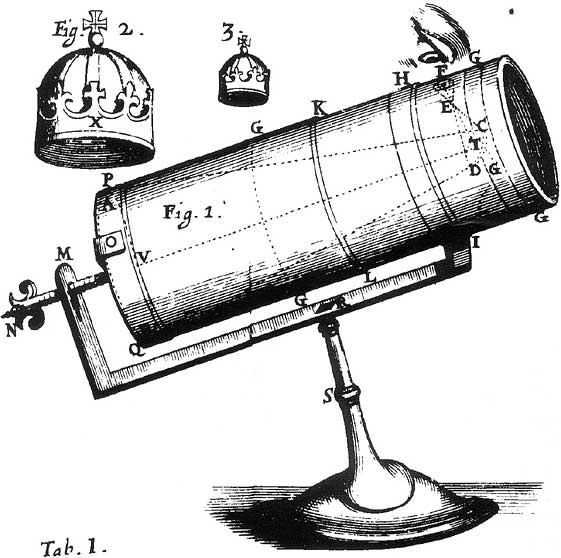 Dr Anna Marie Roos, our Martin Lister Research Fellow, has just published an article on the seventeenth-century physician in Notes & Records of the Royal Society entitled ‘A Speculum of Chymical Practice: Isaac Newton, Martin Lister (1639–1712), and the Making of Telescopic Mirrors’. According to the abstract, ‘In 1674 … Martin Lister published a new method of making glass of antimony for telescopic mirrors, using Derbyshire cawk or barite as a flux. New manuscript evidence reveals that Sir Isaac Newton requested samples of the cawk and antimony from Lister through an intermediary named Nathaniel Johnston. An analysis of Lister’s paper and Johnston’s correspondence and its context reveals insights not only about Newton’s work with telescopic specula but also about his alchemical investigations. Analysing these sources also contributes to our understanding of the nature of correspondence networks in the early scientific revolution in England’. Subscribed users can access the full text of the article here.
James Brown
December 15, 2009
Exhibitions
Tags: Jan Amos Comenius
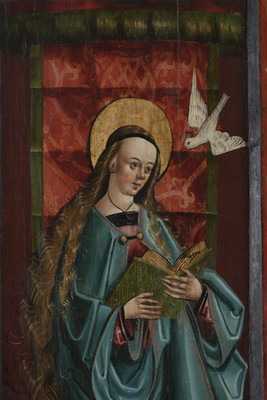 A new exhibition on ‘Art of the Bohemian Reformation, 1380-1620′, curated by our Comenius Postdoctoral Fellow Dr Kateřina Horníčková, will open tomorrow (16 December 2009) at the Imperial Stable of Prague Castle. During the Reformation each of the Christian denominations in the Czech lands used art for representational purposes but, although many of these works survive, those created for non-Catholics have remained little known. The only Protestant church to enjoy legal recognition was the Utraquist; the Unity of Brethren (whose last bishop was Jan Amos Comenius), Lutherans, and Calvinists, did not gain full legal status until 1609. The exhibition, which showcases over 120 works, marks the 400th anniversary of this occasion. It encompasses late-fourteenth-century Hussitism and criticism of the use of images in religious practice, through a blossoming of art under Utraquism and Lutheranism, to the 1619 iconoclasm in St Vitus’s Cathedral, and the final years of the Refomation, which ended with the defeat of Protestant forces at the Battle of White Moutain. Klaudián’s map of Bohemia, the Codex of Jena, the Litoměřice Gradual with its depictions of Jan Hus, a carved altar by the Master IP from the church of the Our Lady upon Tyne, treasures from Kutná Hora, and works by the Rudolphinian artist Bartolomeus Spranger are among the sculptures, altar-pieces, ecclesiastical ornaments, and illuminated manuscripts through which it is possible to trace the radical shift from religious icon as object of veneration to that of image used for didactic, decorative, memorial, and representational purposes. The exhibition runs until 4 April 2010; for full details, see the website.
 Electronic Enlightenment, the pioneering online archive of over 55,000 eighteenth-century letters, has just released its second version. New features introduced include additional content (for example the correspondence of Gustavus III and Adam Smith), and a more powerful range of search and browse functions (you can now sort letters by language, age of writer/recipient, and date range; lives by occupation and nationality; and sources by archive/country and title/publisher of early editions). The site has also been given a fresh new look. Electronic Enlightenment is a research project of the Bodleian Library and the Humanities Division of the University of Oxford, and is distributed by OUP.
James Brown
December 02, 2009
Events, Project Updates
Tags: Samuel Hartlib
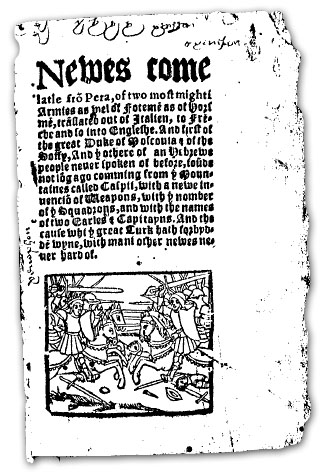 Dr Leigh Penman, the Project’s Samuel Hartlib Postdoctoral Fellow, will this week deliver a paper in the Oxford History Faculty’s Early Modern Europe Seminar entitled ‘Prester John’s Legacy: The Hartlib Circle, Andreas Haberweschel, and the Fantasy of a Christian Kingdom in the Orient in Seventeenth-Century Europe’. As Leigh describes it, ‘in 1643, word reached the London-based intelligencer Samuel Hartlib that diplomats from a heretofore unknown Christian kingdom had recently visited an obscure Bohemian physician, Andreas Haberweschel, at The Hague. Anticipating funds and weapons for Protestant Europe, Hartlib and his compatriots greeted the news, despite its dubious provenance, with delight and enthusiasm. Yet, perhaps predictably, not everything was as it seemed. In this paper, which draws extensively on the Hartlib Papers, I shall unpack some of the contemporary codes and contexts that made news of this Christian kingdom of the ‘Indies’ plausible for those that heard it. I want to use the incident as a looking glass in which we might reflect on the activities and expectations of Hartlib and his circle, as well as of European Christians more broadly. For this incident not only tells us much about the nature of contemporary Reformed eschatology, but also sheds light upon the contemporary reception and assimilation of geopolitical news, methods of constructing ideas of the Christian self through the projection of values on to the other, as well as nascent aspects of imperial ideological discourse’. The paper will take place at 2.15pm on Friday 4 December in the Rees Davies Room of the History Faculty.



 Join
Join 